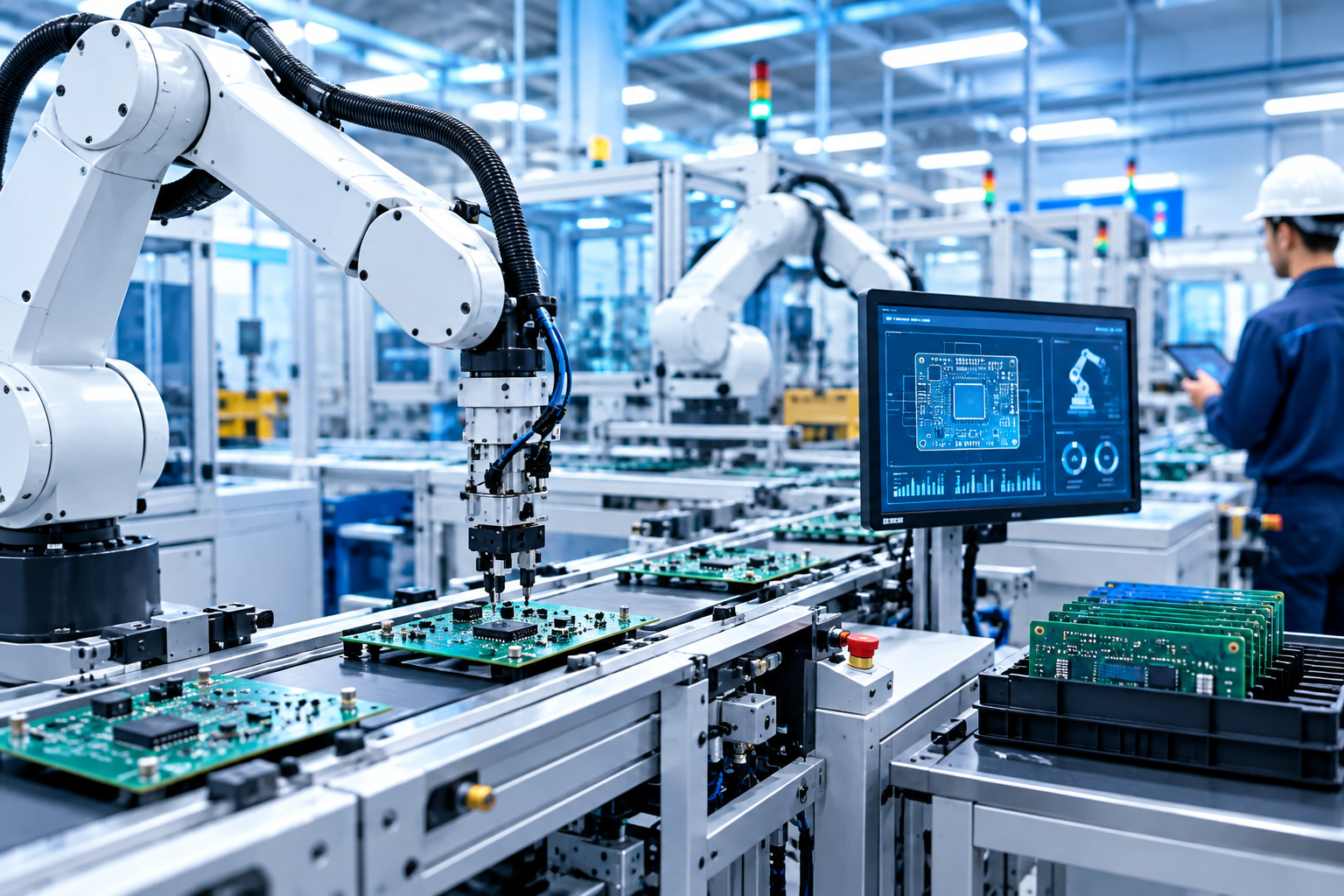
Automation and electronic systems play a larger and larger part in the modern manufacturing practice. The use of robotics and programmable logic controllers (PLCs) is still transforming the industrial processing industry all over the world. It brings a tremendous impact to productivity and efficiency, with structured progressions.
While there are still some that are handmade by master craftsmen, they are few. Fewer people wanting to work in manufacturing and global demand have led to an increase in automation. To produce good products quicker and more efficiently is essential in a global competition and to keep consumer prices at a reasonable level.
To ensure their businesses thrive in today’s world, manufacturers and processors need their employees to be highly trained and educated. The top workers are those with automation or electronic systems technology degrees from college.
The Future of Manufacturing Automation
Every day we use products made in factories and processing plants by automation. These range from cell phones to cars, bread to furniture. Most of us don’t work in factories and are not familiar with the degree of automation and electronics in production.
The manufacturing automation of tomorrow is based on the production and processing lines of the present day. According to a 2023 study by Kissflow these statistics are positive:
Currently, 67% of businesses are using business process automation to streamline and automate much of their day-to-day repetitive work.
- 31% of businesses are fully automated with at least one of their main functions.
- 83% of IT leaders believe that workflow automation is crucial.
- 68% of employees need assistance to do their jobs because they have too much work to do every day.
In the future, the percentage of companies that use automation to some degree will increase significantly, for almost all of them. This is especially true of manufacturing and processing plants.
The Future Of Manufacturing Automation: Robotics
You Would be Amazed to Take a Visit to a Completely Automated Manufacturing Plant!
Robots are designed to work effectively and have a lot of benefits, including:
Manufacturing Automation Course
- Improved efficiency
- Higher precision
- Better quality
- Weld and cut using welding techniques
- Do machining and molding
Robots can undertake these jobs with a high level of accuracy and repeatability. This minimises errors and rework of parts and provides standardised high quality production of parts. Advanced decision-making, reporting, more specialized work, easier integration with other systems, greater capabilities and the ability to complete more complex tasks will be a part of the future of robotics.
Automation and electronic systems in modern manufacturing are becoming more significant by the day, and their contribution to productivity and efficiency is tremendous, given the structured advances that are being made.
Programmable Logic Controllers (PLCs)
The job of programmable logic controllers (PLCs) is to send out programmed control functions to automate and monitor manufacturing processes. The functions are directed to the output devices by the input devices. The input devices are used to measure and provide data from other sources, including computer software, switches, relays, sensors, and thermometers.
The adoption of machine learning algorithms and IIoT applications, and the onset of new technologies, continues to be a growing trend in manufacturing and processing plants around the globe. PLCs will play more important roles as processors of real-time manufacturing data. Manufacturers will change their operations in relation to electronic and automated operations to keep up with the changes.
Impact On Productivity And Efficiency
Business owners today need to have a deep understanding of their needs and need to get the most out of workflow automation, and that’s achieved by having the right software. We have already mentioned some benefits of robotics and automation, and here are some more:
The digitalization and automation together combine to give organisations new technical possibilities. They also help with improved working task and worker management and with optimizing many manufacturing and processing processes, end-to-end.
Advanced electronic automation and robotics systems create greater products in less time, better quality, and at lower costs than the old-style systems. It is safe to say their impact on productivity and efficiency can only go one way and that is up.
The Best Chance you have of Success is to get a College education
Perhaps you’re thinking, what does a college degree have to do with automation, robotics, and electronic systems? If you’re not sure, find out by enrolling in the Automation and Electronic Systems Technology Program at ITI Technical College. Our Associate of Occupational Studies (AOS) Degree covers the following lessons:
- Application of analog and digital electronics, microprocessor control skills in the real world.
- Training on the use of equipment used in troubleshooting electronic control systems
- The use of digital multimeters, oscilloscopes, function generators and logic probes
- Programmable logic controller skills, networking course
- Use of low voltage and automation fiber terminations
- Develop skills to use Input/Output systems and Arduino development platform
- Basic computer applications and technical writing skills
Find out about this interesting and rewarding program and get ready for an entry-level job in the field of automation and electronic systems technology. For more information on all our programs,