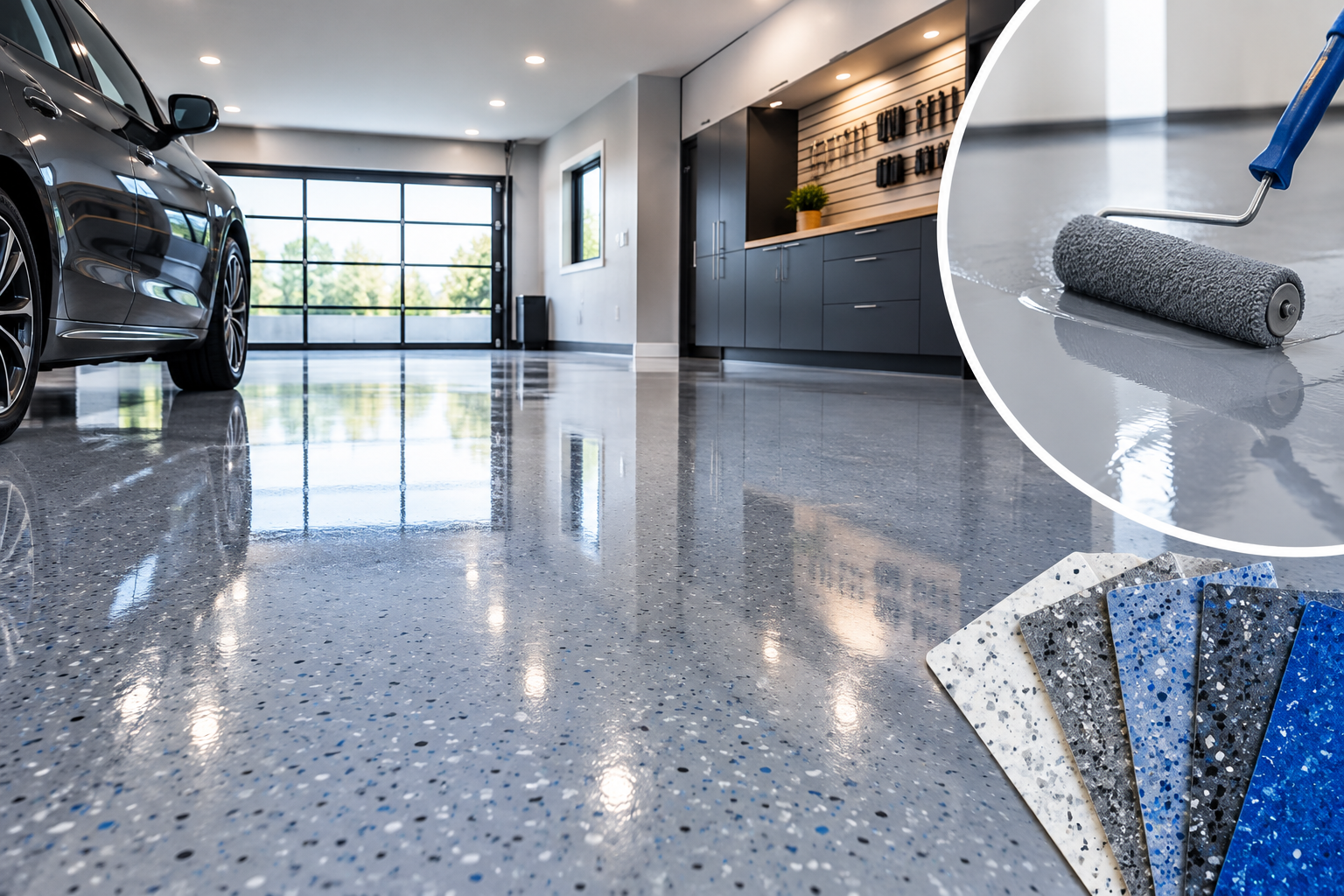
The flooring in any room or building is a crucial component of its design, quality, and usability. Epoxy flooring is becoming a favorite choice for home, business, and interior designers in 2026, thanks to its stylish design, durability and relatively simple care. Whether in residential garages, kitchens, or commercial settings like retail stores and warehouses, epoxy flooring proves to be a valuable option in various settings.
An epoxy floor has a smooth finish, unlike conventional floor coverings, it can have a combination of strength and fine appearance. As the world becomes more interested in modern interior, it’s becoming an attractive choice for property owners that want low-maintenance building materials and functionality, as well as style.
Epoxy Flooring: What Is It?
Epoxy flooring is a system of surface coatings that consists of a blend of epoxy resin and Hardener. These two components combine and create a strong, durable layer that will adhere to the concrete surface if the surface is properly prepared.
The resulting floor surface can offer a smooth, shiny and seamless surface. Epoxy flooring can also be matched in colour and various textures, flakes, metallic finishes can be added depending on the product and installation technique.
Epoxy flooring is generally installed in garages, industrial facilities, hospitals, showrooms, warehouses, retail and some residential areas. Its flexibility allows it to be used in various applications where aesthetics, longevity, and cleanability are crucial.
What is Epoxy Flooring Popular for in 2026?
There are a number of reasons why epoxy flooring is becoming increasingly popular. Today’s homeowners seek flooring that will suit the look of their home and have a durable performance they can depend on.
1. Modern and Attractive Designs
Epoxy flooring offers a number of benefits, one of which is its design flexibility. There are also many interior style choices to be had from solid hues to high gloss finishings, decorative flakes to patterns with metallic finishes for property owners.
In particular, metallic epoxy flooring produces unique patterns that will look like flowing marble or a smooth stone floor. These finishes are often found in showrooms, entertainment areas, garages and modern interiors where the floor will be used to create a visual impact.
2. Excellent Durability
Another significant factor for the popularity of epoxy flooring is its durability. Depending on the formulation and the conditions it will be used in, a system that is professionally installed can withstand abrasion, wear from everyday use and many common spills.
This is why epoxy is a good solution for garages, workshops, warehouses and commercial spaces that often have to be used by a lot of people or with the transfer of loads.
However, the performance of the product will depend on the proper surface preparation, coating thickness, product quality and application.
3. Easy Cleaning and Maintenance
In some cases, cleaning grout lines, stain treatment and repairs to damaged areas may be required to maintain traditional floors. Epoxy flooring is generally very easy to clean on a regular basis, as there is usually no need for any grout or seams.
Most routine dirt and grime can be cleaned with a soft broom, mop and appropriate cleaning agent. This ease of use is beneficial for applications such as commercial areas and homes that experience a lot of traffic and require the floor to be clean.
4. Stains and Chemical resistance
There are a number of epoxy flooring systems that offer protection against oil, grease and certain chemicals. This feature is particularly useful in garages, car workshops, manufacturing plants, labs, and workshops.
However, there are different formulations with varying resistance. Some chemicals can harm and degrade an inappropriate coating, and the property owner must choose a system that is appropriate for their site.
5. Customization Options
The creative possibilities with epoxy flooring are plentiful. Common finishes include solid colours, decorative flakes, metallic and anti-slip finishes.
Businesses can pick colours to match their brand, homeowners can pick colours that go with their furniture, walls, and interior design.
The versatility of epoxy flooring is born out of its ability to be customized and its practicality, which makes it appropriate for many types of properties.
The most popular types of epoxy flooring
Knowing what options are available can help property owners make their choice of flooring system.
Self-Leveling Epoxy Flooring
Self-leveling epoxy is used to form a smooth, fairly level surface on a well-prepared concrete surface. It is commonly found in showrooms, commercial structures and certain residential areas.
It is also easy to clean and maintain, making it a good choice for areas that require high levels of cleanliness and maintenance.
Metallic Epoxy Flooring
Decorative pigments are used to create multidimensional patterns and reflective effects with metallic epoxy. This is an appealing solution in garages, modern bathrooms, and luxury decor concepts, and can create a unique look for each installation.
Final result will vary based on the pigments, application method, lighting and the hands-on experience of the installer.
Epoxy Flake Flooring
Epoxy flake flooring is a decorative coating system that includes coloured flakes. The flakes can help to fill in small imperfections on the surface to add some texture.
A flake system can also help to achieve a better slip resistance depending on the aggregate and topcoat used. It is widely used in garages, workshops, utility rooms and in specific commercial applications.
Anti-Slip Epoxy Flooring
Anti-slip epoxy systems can be used to add the appropriate aggregate or texture for traction. These might be suitable for workshops, industrial applications and other places where slipping is an issue.
The degree of slip resistance will vary based upon materials, texture, contamination, and maintenance. The selection of system is critical for the intended use.
What are the applications of epoxy flooring?
Although the list of functional uses for epoxy flooring is long, the ideal system will vary based on the environment and the nature of the existing surface.
- Residential garages: Protects concrete from normal usage and from most auto spills.
- For commercial showrooms: Reinforces the professional image necessary to enhance product displays and modern interiors.
- Warehouses: Can provide a surface that will last for specific traffic and operations.
- Retail stores: Allows for customisable colours and finishes, which can help to create a consistent visual identity.
- Workshops: Offer a surface which can be easier to clean if the proper coating is used.
- Established kitchens and utility rooms: Can provide a smooth appearance if moisture, slip resistance and product compatibility are all taken care of.
The property owners need to take the following factors into consideration before installing epoxy flooring: moisture, traffic level, chemical exposure, temperature and safety requirements.
What Is the Process for Epoxy Flooring?
There are several steps that must be taken to ensure a successful epoxy floor installation. While each product has its specific application demands, there are a number of steps involved with the process.
Step 1: Surface Inspection and Preparation
The installer checks for cracks, contamination, weak points and moisture in the concrete. This surface is then treated by a suitable process, often mechanical grinding, to ensure the coating will adhere.
Step 2: Repairs and Cleaning
Cracks and other defects are repaired, and dust, grease and debris are cleaned out. Another possible reason for moisture testing is that too much moisture can lead to coating failures.
Step 3: Primer Application
Depending on the system chosen, a primer may be applied to aid adhesion and to ensure uniform coating action.
Step 4: Epoxy Application
The resin and hardener are mixed in the ratio given by the manufacturer. The mixture is then applied within its specified working time, using the appropriate tools and application technique.
Step 5: Decorative finishes & topcoat
Decorative flakes, pigments or other features may be added where necessary. Use a topcoat compatible with the basecoat to give it extra protection and help the overall finish and anti-slip properties.
Step 6: Curing
The coating must cure in order for the floor to be used. Heavy equipment placed on the surface prematurely and moving vehicles or vehicles walking on the surface can affect the outcome. Follow manufacturers’ recommended curing procedures.
How Much Does Epoxy Flooring Cost in 2026?
The installation of epoxy flooring can be influenced in many ways including the quality of the product, the type of design, the area of the floor, the location, and any necessary installation requirements.
A simple coating system is typically less expensive than a decorative metal or a heavy-duty industrial coating system. Frequently, the overall project costs can rise due to extensive concrete repairs, moisture mitigation, specialized primers and slip-resistant additives.
Property owners should ensure estimates encompass surface preparation, repairs, primer, entire coating system, topcoat and labour.
It is wise to compare materials, methods of preparation, warranties and installer experience, not price. It is better to install a coating that has a long life than to install a low dollar coating on a substandard surface.
Advantages and Limitations of Epoxy Flooring
While there are many practical advantages to epoxy flooring, there are other properties that do not make it the ideal choice.
Key advantages include:
- A long lasting performance if it is properly installed and maintained.
- A smooth surface for easy everyday maintenance.
- Wide choice of colours and ornamentation.
- Resistance to most common stains and to some chemicals.
- Options for different residential and commercial applications.
Important limitations include:
- Appropriate surface preparation and curing time are required for installation.
- Adhesion failure could be caused by moisture-related issues.
- Some coated surfaces may be slippery when wet.
- Some coatings can scratch, discolor or break down in poor conditions.
- Repairs might be apparent, especially on decorative finishes.
- Knowing these can assist property owners to make their decisions and choose a system that fits them.
How to Choose the Right Epoxy Flooring System
The first step is to determine what the floor is used for. A garage home setting may need to be vehicle, oil and hot-tire resistant, a warehouse may need a forklift and heavy load resistant system.
Then look at its look, maintenance needs, slip resistance, and moisture and chemical resistance. Inquire from the installers their surface preparation methods, product characteristics, useful life and maintenance suggestions.
It can also be beneficial to see finished work, and ask for a detailed written quote. Any installer worth his salt should explain the pros and cons of the system being installed, and not say that all epoxy coatings operate the same.
Conclusion
In 2026, epoxy flooring is a material gaining traction due to its contemporary design options and the fact that it is durable, clean and can be finished as needed. The proper epoxy system can make a concrete floor more functional and aesthetically pleasing in residential garages, commercial showrooms and manufacturing operations.
Long term performance requires the right coating, sound substrate preparation and adherence to installation and maintenance instructions, however. Homeowners and businesses can assess the needs of their property and make the decision whether or not the epoxy flooring is a good investment for their space by comparing the recommendations of the professionals.