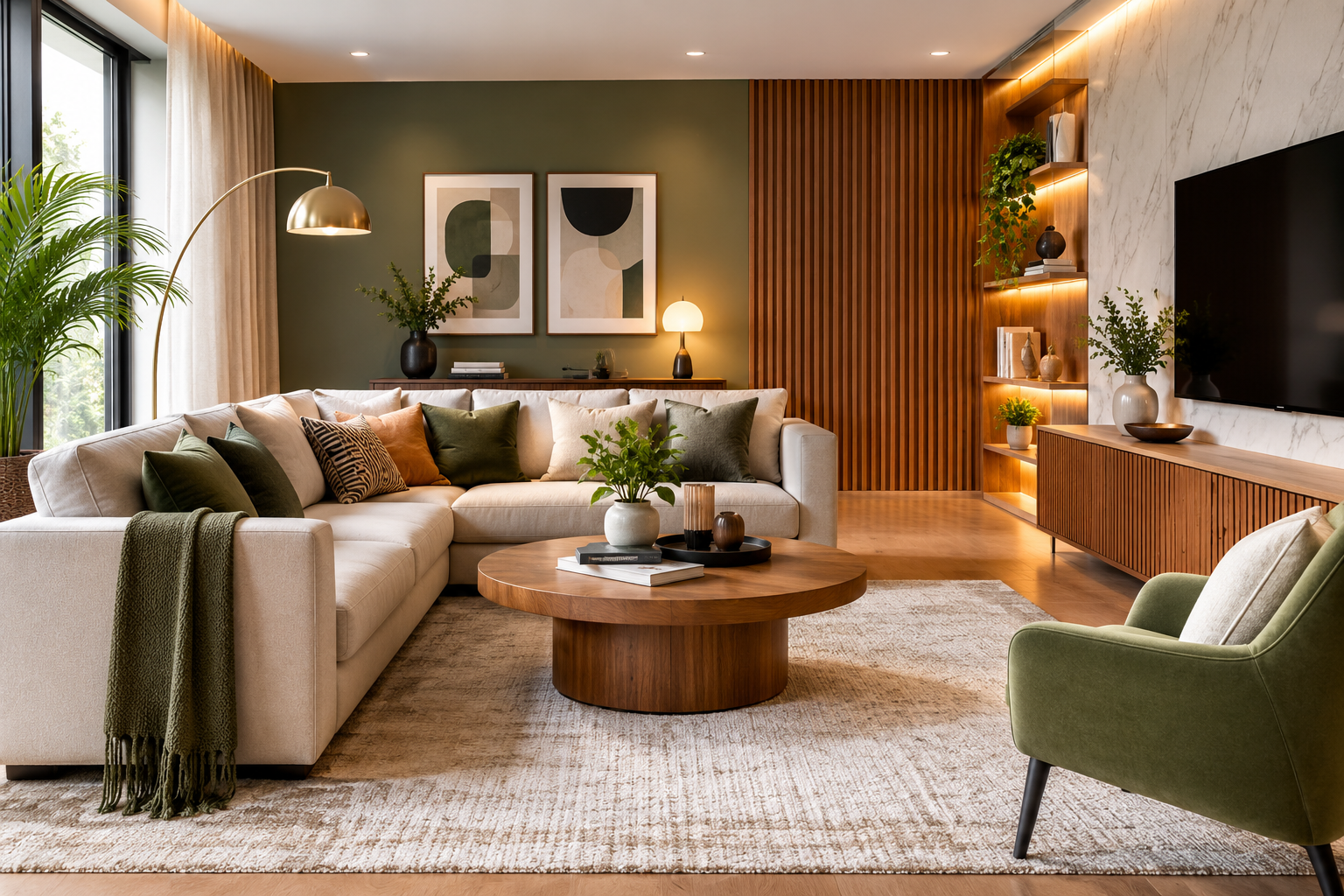
The hall or living room is no longer just a space shared by everyone, but it’s a space that embodies each individual’s style in the modern interior design of a home. The use of a false ceiling is one of the most useful and underused components of this area. Today’s false ceiling designs serve as a major tool in creating room atmosphere, size and visual identity, as well as concealing wiring and enhancing room acoustics.
Whether you’re looking for subtle gypsum panels or crafting a statement ceiling, this comprehensive guide offers a detailed exploration of the latest false ceiling designs for your halls in 2025, and the impact each style will have on your space.
1. Minimalist Perimeter False Ceiling
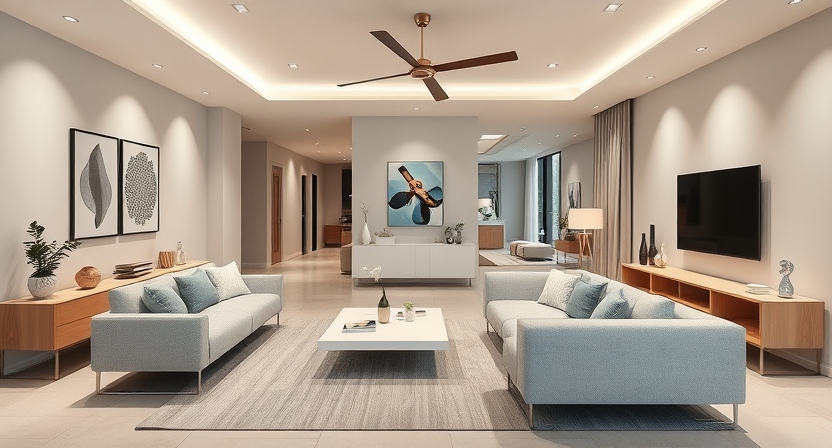
A perimeter false ceiling offers a sense of clean lines rather than detailed design. The centre of the ceiling is left blank with the edges slightly lowered, sometimes with concealed LED strip lighting. This design will help to give the impression of a larger area and keep a sense of lightness and openness.
This type is particularly convenient in small halls, apartments, etc. with low ceilings. A minimalist aesthetic may be achieved by using shades of white, beige or grey.
2. Cove Lighting False Ceiling
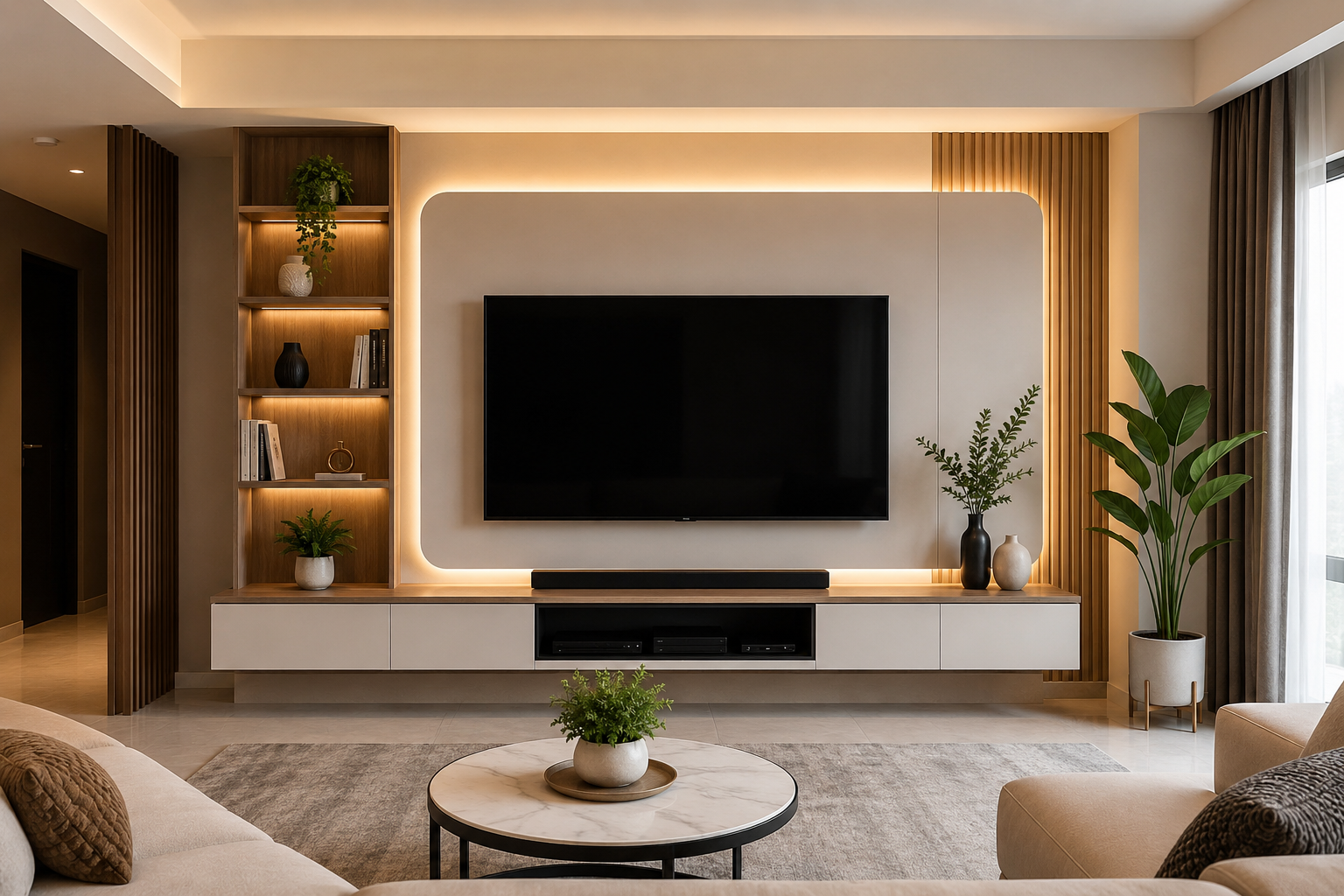
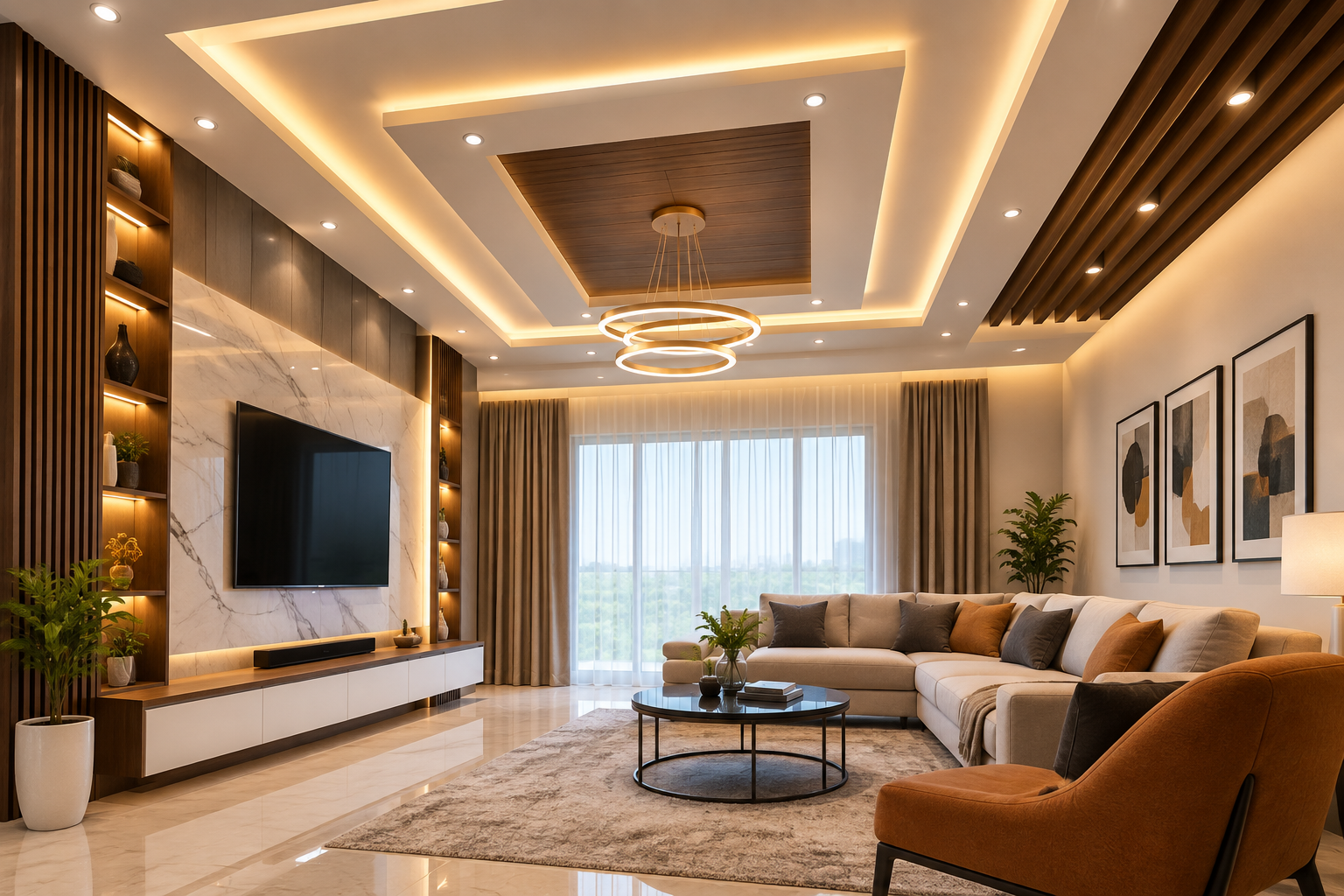
Cove lighting ceilings are designed to light the backlight, and not bright light. LED lights are recessed and light is reflected softly from areas. Living rooms are the best examples of spaces that could benefit from this type of ceiling, as the main needs there are comfort and relaxation. This ceiling design is perfect for layered lighting, where cove lighting is combined with spotlights or floor lamps to create a comfortable and inviting space.
3. False ceiling (wooden slats)
Wooden slat ceilings add warmth and texture to contemporary interiors. This linear ceiling design is comfortable and fashionable, and can be constructed of wood or wood-finish laminates. It’s a great ceiling design for areas with neutral colored walls and very little furniture in the space, and will give it a modern and comfortable look.
4. Concrete Ceiling Designs and Patterns.
Geometric ceiling designs include sharp lines, angles and unconventional designs to create a striking impact. POP (Plaster of Paris) ceilings can achieve intricate designs and patterned ceilings.The design is apt for modern city apartment and should be used with simple furniture and less colour schemes to avoid visual congestion.
5. Floating False Ceiling Design.
Floating ceilings create a suspended ceiling effect by making it so lighting towards the edges is not visible. The subtle lighting effect exudes a luxurious and futuristic look. The design works best for contemporary houses which do not wish to be over ornated but simply luxurious.
6. Circular False Ceiling
The curved ceiling ceiling creates a break in the straight lines that are prevalent in contemporary interior design. Circular or oval designs are common to emphasise seating areas or centred lighting. This design works great in an open-plan living room, and makes for a seamless look.
7. Plus-Minus POP Ceiling Design
The plus-minus ceiling design has raised and recessed areas that alternate, giving it a sculptural, three-dimensional look. While dramatic, it is not over the top and is perfect for a statement living room. The lighting is an important element in making this design stand out.
8. Coffered Ceiling Design
Coffered ceilings have a recessed panel grid, giving them a classic and luxurious look. The clean lines and neutral colors have been introduced into newer designs, but traditionally, this type of design was used in mansions. This type is ideal for halls which are extremely tall, and would definitely feature structure and luxury.
9. Mixed Material False Ceiling
The use of various materials like gypsum, wood, metal, and laminate adds depth and contrast to the ceiling. This design is usually personalized to the homeowner’s personality. This design is perfect for those who wish to have a designer living room.
10. Linear Strip Ceiling Design
Linear strip ceiling is repetitive and symmetrical. This design has parallel grooves or slats, which may be lit up with LEDs, and adds a modern and sleek appearance. This design is suitable for minimalist interior designs, and can be implemented in small or big halls.
11. False Ceiling with LED Panel
LED panel ceilings ensure even lighting and a contemporary appearance. These panels can mimic natural light as well, an ideal option for halls with minimal natural light. A bright, modern and clean effect is the result.
12. Textured False Ceiling Design
Textured ceilings have a texture that adds some interest but is not too intricate. They are particularly conducive to minimalism, and where texture becomes a design element instead of color. The hall is given subtle elegance by this design.
13. Acoustic False Ceiling
The acoustic ceiling ceiling allows the design and use to go hand in hand and offers sound absorption and echo reduction. These ceilings are made with soundproof materials and are perfect for a TV room or entertainment area at home.
FAQs on False Ceiling Designs
In a small hall, what is the best false ceiling design?
For small halls, use minimalist designs along the perimeter and floating ceiling designs to maintain an open visual space.
Which is preferable for false ceilings – gypsum or POP?
Gypsum can generally be installed faster and provides a smoother finish whereas POP can provide more complex detailing. Depending on design complexity and budget, either one can be chosen.
Are false ceilings “taking up” space?
Yes, slightly. But smart designs such as perimeter or tray ceilings can help preserve the sense of height.
Is it costly to maintain false ceilings?
Today’s false ceilings are relatively easy to maintain and only need to be dusted occasionally and some minor maintenance.
Is it possible to decorate and fit a false ceiling with lighting?
Absolutely. Spotlights, pendant lights, LED panels and cove lights can all be easily incorporated into false ceilings.