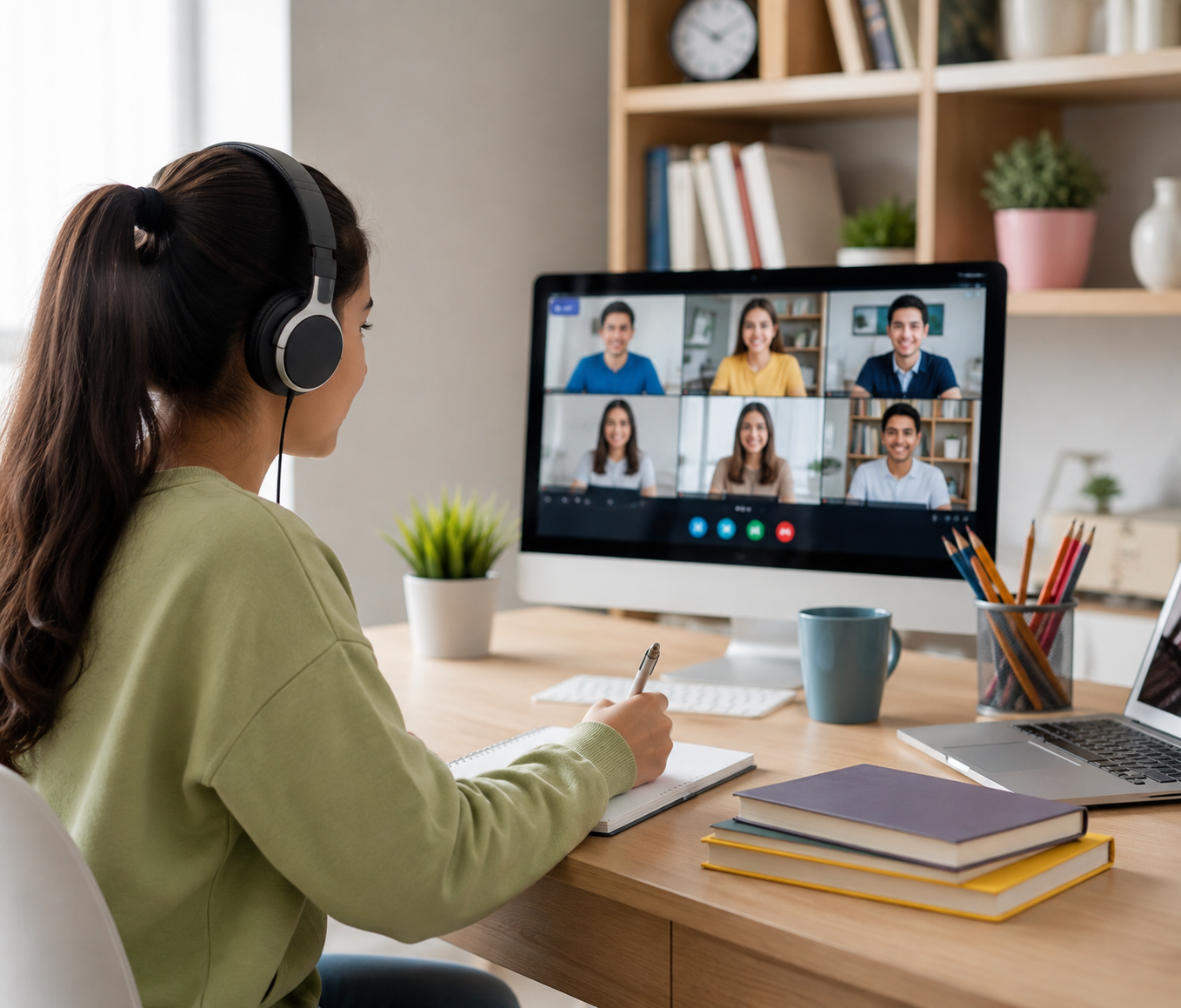
Learning doesn’t have to be in class. People can take lessons, do homework and learn new skills from almost any location with the device and internet. This is why online education has become a viable choice for students, experts and anyone wishing to pursue education without having to be tied to a specific location.
What Is Online Learning
Online learning is basically education that’s offered via the World Wide Web. Learners have lessons, assignments, study materials and other contents through digital platforms rather than in a classroom. There are live courses and there are courses that allow you to work through the content when it works best for you. This experience can vary from course to course, but should still be for the purpose of enabling people to learn anywhere.
How Online Learning Works
The concept of online learning is simply to substitute the classroom with an online environment. Students learn on a computer, tablet or phone to take lessons, hand in work and interact with teachers. Some courses are live, and take place at fixed times, more like a normal class. Some are self-paced, and learners can study at their own pace. Most programs rely on a combination of both, as there’s always a need for flexibility – but there’s also a need for questions, and interaction with other people.
Learning Management Systems
The majority of online courses are based on a Learning Management System or LMS. Imagine that it is the central place where all things reside. All lessons, assignments, grades, announcements and discussion boards are all held together in one location. These are necessary to online learning or it would soon become chaotic. They provide a clear pathway for students and help teachers to better oversee coursework and student progress.
Digital Learning Content
Digital content is integral to online learning. Courses may combine video, interactive exercises, downloadable resources, and virtual activities with the printed course. Some formats are suitable for some learners. Others like to see a demonstration. Still, others learn well through reading or experiencing something for themselves. Multiple options allow for more flexible learning experience and can be more engaging.
Virtual Communication and Collaboration
One of the misconceptions is that online learning is learning individually. In fact, it’s a very important aspect of communication. Student can enter into real-time conversations, collaborate on projects, attend a meeting, or communicate directly with instructors. Courses differ in terms of interaction and independence. In either case, digital tools enable learners in diverse settings to learn and work together without meeting in person.
Types of Online Learning
People don’t learn the Internet the same way. A few like the format of the planned lessons, others prefer to do lessons at their own time. This is why there are a variety of ways to do online learning. This will depend on the amount of flexibility, learning modalities and preference for self-learning from others or learning from instructors and classmates.
Synchronous Learning
This is most like the actual classroom environment. The whole group meets at the same time, be it for a lecture, workshop or group discussion. Questions may be raised at the moment, and answers provided. Some learners like that structure as it keeps them accountable.
Asynchronous Learning
Many online courses are like this. Lessons, readings, and assignments are already posted, and you choose when to do them. It’s more free and flexible, but there’s a problem. When there’s no set schedule for classes, it can be tempting to put off doing things until the next day.
Blended Learning
Some learners want to be flexible but don’t want to lose the human touch. Blended learning is where learning comes in. Some learning is done online, and some learning is done in the classroom or in live sessions. Provides students with greater autonomy in their learning while not taking away the scaffolding and sharing that can be found in in-person instruction.
Self-Paced Learning
This is an option that provides the most control for the learners. You work through lessons at your own pace and take more time to work on areas that require additional work. Some people get it done in no time at all. Some people take their time. The difficulty is not getting access to the material. It’s when nobody’s pushing you to keep going.
Advantages And Disadvantages Of Online Learning
Anything that comes with benefits brings along some drawbacks, too. Online learning is flexible, affordable and offers you a wide selection. It can also result in social isolation and screen fatigue, however, which can have an impact on your eyesight. Moderation and self-discipline are the keys.
The benefits of learning online
Technology is not the only reason for the rise of online learning. It is convenient. For many, the best part is that they can learn in the context of their lives rather than rearranging their lives to accommodate learning. After your children go to sleep, a parent can study. There are ways to take a course, and still work. It wasn’t always possible with traditional education. Some more advantages include:
The place is not too important, either
All the other benefits of online learning are not to be forgotten: the ability to learn at your own speed. Not to mention that it can be less expensive too!
Students are able to choose skills which they didn’t anticipate learning themselves.
Online Learning is Not Without its Drawbacks
Online learning seems easy when it is written down. Login, view lessons, and do homework. There can be a bit of a twist in the truth. Many students find themselves becoming flexible because they accept responsibilities. No one is at the front of the classroom tapping you on the shoulder to get your attention. It can be difficult to concentrate when there are distractions nearby. Some more disadvantages include:
- Not being able to interact with the person face-to-face can be challenging too.
- Technology also can cause problems!
- Screen Fatigue is not something that’s a myth.
- There are limitations to online learning when a course is practical in nature.
How Is Online Learning Helpful
The most notable change in the education system with the advent of online learning is the way that the system works as a whole. Nowadays, teachers don’t just have to say what is said, but can also share some interesting bits and pieces of information on the subject. This way, students get to learn more and better, making online learning helpful for kids as they can learn at their own pace. The Internet is so common that anyone can access the world of information and do it without restriction.
Flexibility
No matter where and when, learners have the flexibility to access the knowledge they require. The ability to take in knowledge, be it for students or teachers, is most valuable. In freedom, the freedom of being able to learn, being able to study, sounds easy, but it’s a whole lot easier said than done for many learners.
Access to a Wide Range of Courses
Students can sit in their seats and access courses – sometimes even free! They now have access to a variety of courses which strengthen their learning experience. The difficulty is not necessarily in finding a course. It is the choice that has to be made.
Self-Paced Learning
Students need not study without preparation. With online access to all the data, they have the liberty to learn at their own pace. Online learning provides the student greater control. Should a topic appear to be challenging, they may take longer at that topic.
Improved Critical Thinking and Problem-Solving Skills
What is often ignored is the amount of independent thinking expected of online learning. You may not always find the answers right before your eyes when you are studying online. There is the need for research, comparison of sources, identification of reliability, and problem solving without the assistance of others. Solve a technical problem, even one as simple as that, and it can be part of the learning process.
Digital and Technology Skills
Technology is used in the majority of occupations nowadays. Of course, online learning makes people more comfortable in using it. Students are engaged in video calling, collaborative documents, learning platforms, discussion forums, and digital resources.
How Online Learning is Not Helpful
There are individuals who are successful at online learning. For others, it reveals issues that only become apparent after a couple of weeks into a class. It’s all well and good to be flexible at first. Then there’s distractions and technical problems. Motivation does not seem to be as high as is desired. Some of the subjects also require lots of hands on practice, something that can’t be replicated on a screen.
Lack of Face-to-Face Interaction
It is often only when we don’t have the people in the classroom that we recognize the impact of the interactions we have with them on a daily basis. Video calls are not the same as being in class with peers. Students miss out on asking random and quick questions or picking up on body language. Sometimes online courses can be isolating.
Technical Difficulties
Online learning can be frustrating due to technical problems. If the internet connection is not good, the platform goes down or the laptop updates during class, there’s a disruption to learning. All these technical issues can throw the whole class off. Though no more than a few minutes of a minor lesson may seem insignificant, add them up over the course of the year.
Limited Access to Resources
Typically, people think that online learning only involves a computer and an internet connection. In reality, it’s a lot more complicated. Not all of us have a place to study in a quiet environment, fast broadband, or even a reliable computer. Other subjects also require physical equipment, lab or studio space.
Self-Motivation Challenges
This is likely the area where many online learners get stumped. When there is no teacher in the room and you and your peers aren’t working together, it’s easy to put things on the back burner. One missed lesson equals two missed lessons. Then a week passes. Freedom is what online learning provides, but it comes with responsibility.
Limited Access To Certain Programs
There are some skills that require experience. Theory can be learned online; however, skilled courses and lab sciences, such as engineering, nursing, and other field-based courses, typically require real equipment, supervised practice, and on-the-spot feedback.
What Makes a Good Online Learning Program?
Not all online courses are created equally. Some make studying easy. Others leave you continually being shown endless menus with no idea where the next lesson is going to be. The distinction typically lies in the approach, implementation and facilitation of the program itself, as well as the support provided for learners during the learning process.
Clear Learning Structure
Confusion is one of the things that quickly frustrate learners. A sound online program doesn’t overwhelm you. It divides the topics into smaller parts and provides you with a clear line of action. You understand the content you are studying, why you are studying it, and what is next.
Instructor Support
Many think online learning is self-guided learning. Not exactly accurate. Tons of instructor support can mean the difference between success and failure, particularly when you are stumped on a concept or losing steam. Effective teachers remain accessible. They respond, give feedback and check in when students are having trouble.
Progress Tracking
It’s comforting for most learners to know they’re making progress. This is why good online programs have very easy tracking. Visual progress, whether in the form of a completion bar, checklist or a dashboard tracking the completion of modules, can help to motivate people.
Accessible Learning Experience
This is an area many course creators miss out on. Humans have varied learning styles and vary their learning environments. A successful online program should be accessible and usable across devices, assistive technologies, and easy to access for all learners, regardless of ability.
How To Succeed With Online Learning
Two main tips for success are being consistent and disciplined. When control and discipline are lost, you will regret online learning. With no school to attend each day it’s very easy to get behind. The ones who perform well on the Internet are not necessarily the most intelligent ones in the classroom. It is their responsibility to make things happen on days when they are not feeling motivated.
Develop a Learning Plan
A frequent error that learners make is studying when they have the right “feeling”, which is when they have to. This is good for a couple of days. Then there’s lots to do. The key to making online learning more manageable is to set aside a regular time of the week to do it. Consider reading for a study session, and not a choice.
Create a study corner!
The context you are in is crucial. It can be even more difficult to concentrate if you are trying to learn in the same environment where you watch TV, scroll social media, or take naps. Your mind begins to connect that place with all things but study.
Stay Engaged and Participate
Here’s one thing that surprises the online learners. It’s not watching lessons that makes you learn. There is a tendency to be able to sit through a lecture, nod your head, feel good and feel like you accomplished something. Then, a week later you don’t remember much. Most learning is done while engaging with the content.
Seek Help When Needed
There are many online learners that will wait too long before seeking help. They think that things will work out. Sometimes they do. A little issue escalates into a big issue. Contact early if you have any questions, problems with any assignment or if you are behind.
The Future of Online Learning
If learning skills are taken up seriously and responsibly, its future is quite bright. What is interesting is that online learning is a growing field. Most courses were simply recorded lectures and PDFs a couple of years ago. This is already changing. Learners are now looking for greater interaction and flexibility. It will likely be a time of transition between classrooms in the future.
AI-Powered Learning
Many folks have already encountered AI-powered answers to questions or written content. One of its use cases is now education. AI can provide a personalised learning pathway by recognising learners’ weaknesses and correcting their way.AI can help identify the learner’s weakness and correct their way, rather than giving all learners the same experience.
Skills-Based Education
Many of the students are not interested in certificates anymore but are interested in developing real skills. Employers are asking similar questions. Do you have the skills to do the job? Are you able to solve problems? Can you adapt? What individuals want is learning that is directly applicable in the real.
Hybrid Learning Models
Not all students are interested in a 100% online experience. Not everyone either wants to be in the classroom everyday or does. Hybrid learning comes into the picture here. It allows you to study online, but also get the interaction and accountability of being in the classroom with instructors or students.
Frequently Asked Questions (FAQs)
What do you mean by online learning?
In the simplest of terms, online learning is a way of teaching learning online. Learners engage with their teachers on digital devices such as phones and laptops and understand and complete their tasks, without the need to attend the traditional classroom setting. Online learning has enabled learners to be location-independent, and access all types of courses and classes.
What types of online learning are there?
Examples of online learning include story-based interviews, micro-lessons in the language, and comprehensive courses available anytime, anywhere.
What are the disadvantages of online learning?
It’s no secret that online learning is good. In the midst of all this flexibility and accessibility, however, there are social isolation, dependence and the digital distraction, which can result in the loss of time in learning. But the benefits of online learning can only be seen when you maintain a proper schedule and have control over other applications.
Is online learning effective?
The answer that is easiest to say is yes. Online learning is very effective. It is capable of fostering robust learning results which exceed the learning results obtained in the conventional classrooms. But the effect of online-learning depends on student self-motivation, self-discipline and decoding of information without external support.