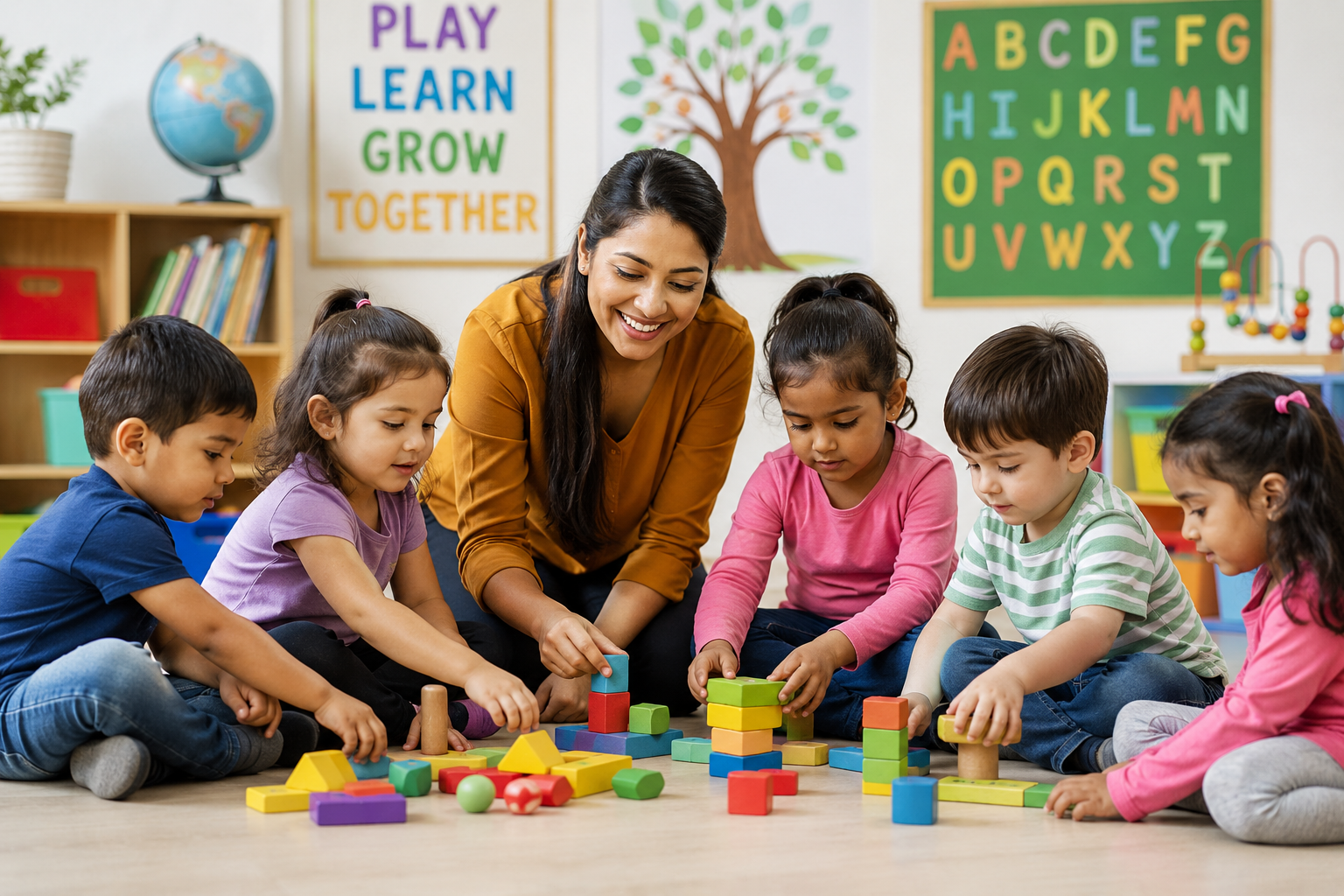
The role of early childhood education is crucial for the growth and success of a child. Children’s learning, communication, and social skills are developed in the first few years of life. Children reap the benefits of a solid educational base in these years, developing confidence as learners and preparing them for school and life.
Why is Early Childhood Education Important?
Early childhood years are regarded as the most formative years of a person’s life. The brain has a period of rapid growth during this time, which is conducive to the learning of new skills and understanding the world around them. Early childhood education creates a secure and supportive environment in which children can investigate, ask questions, and build their skills at an age-appropriate level.
Good early education leads to children doing better in school, communicating better, and having good relationships with others.
How Does Early Childhood Education Contribute to Brain Development?
The brain grows more rapidly in the first 5 years of life than at any other point in time. Brain connections are strengthened through activities like stories, singing, drawing, playing, and simple problem solving. Early childhood education promotes curiosity and creativity, and children learn naturally, in fun ways.
Children are also introduced to routines by teachers and caregivers, encouraging them to learn about structure, responsibility, and self-discipline as early as possible.
What Skills are Developed in Early Childhood Education?
Early childhood education is about more than learning letters and numbers. It assists children to develop key life skills that they will need in life.
Children practise expressing their feelings, listening, communicating clearly, problem solving, sharing and working collaboratively in groups. They also develop their motor skills by playing with blocks, drawing and playing outdoors.
The experiences provide good preparation for learning and growth.
What is the reason for the importance of Social and Emotional Development?
The skills needed to relate to other people are as vital as academic learning. Children are learning to cooperate, respect others, manage emotions, and develop empathy in early childhood education.
Children feel safe and supported, therefore confident learners. They know how to deal with difficulties, how to make friends, and how to express their emotions in healthy ways.
Children also settle into Primary school more easily if they have strong social and emotional skills.
How is Early Childhood Education Preparing Children for School?
It can be a huge transition for young children when they start school. Early childhood education makes this transition easier by laying the foundation before children start school for routines, classroom behavior, and foundations of learning.
Children learn to listen to teachers, take instructions, work on their own, and work in groups. This trust can diminish feelings of uncertainty and can lead them to have a positive attitude towards learning from the start.
Can Early Childhood Education Improve Future Success?
It has been established that quality early education is beneficial in the long run. Children who benefit from early learning are likely to achieve well, go to higher levels of education, and acquire important work-related skills later in life.
They also tend to be better able to think for themselves, to communicate with people, and to be responsible citizens.
A child’s experience throughout the early years is unique but can have a positive impact in the future.
How Are Parents Involved in Early Childhood Education?
The first teachers of a child are their parents. Children learn at home through being read to together, through regular conversations, responding to questions, and through play.
Consistent guidance and encouragement are received when parents and teachers collaboratively work with children. The partnership supports children’s confidence, curiosity, and love for learning.
Things as simple as counting objects, pointing to colors, or telling stories can have a positive impact on the development of a child.
Conclusion
Early childhood education is more than just school readiness. Develops the bases of lifelong learning, emotional health, and personal development. Early education enables children to do more and reach their full potential through encouraging curiosity, communication, creativity, and confidence.
Early childhood education investments have a positive impact on the individual child, the family, the community, and society.
Frequently Asked Questions (FAQs)
What is the best age for early childhood education?
Most children attend early childhood education until they are about 8 years old, and preschool programs typically cater to children from 3 to 5 years old.
Why is early childhood education important?
It is beneficial for brain development, social and emotional development, confidence, and future academic success.
What is taught to children in the early childhood education sector?
Through interactive activities, children develop communication and language skills, early mathematical thinking, problem-solving, creativity, teamwork, emotional regulation, and early literacy.
What ways can parents involve themselves in early childhood learning at home?
Reading to children, facilitating creative play, engaging in frequent conversations, setting routines, and offering opportunities for exploration and learning are all activities that can be done with children by their parents.
Does early childhood education make a difference in the future?
Yes. High-quality early learning can make a difference to children’s academic achievements, social skills, confidence, and learning behaviors, enabling them to be successful in school and beyond.